0% Complete
صفحه اصلی
/
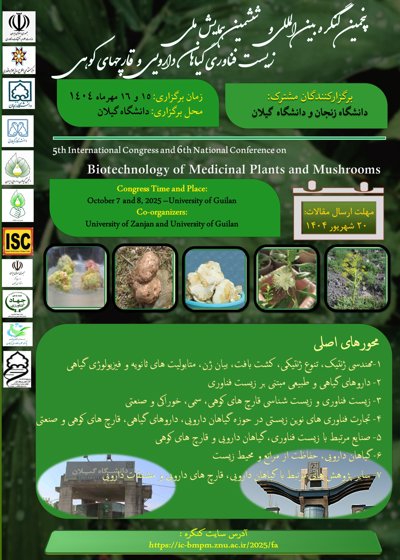
پنجمین کنگره بین المللی و ششمین همایش ملی زیست فناوری گیاهان دارویی و قارچ های کوهی
ارزیابی اثرات ضدمیکروبی تفاله های دور ریز گیاهی (تفاله چای سیاه، پوست پرتقال و پوست سبز گردو) بر باکتری های بیماریزا در شرایط آزمایشگاهی
نویسندگان :
سمیه عطائی جلیسه
1
مائده صابری
2
1- دانشگاه آزاد اسلامی واحد رشت
2- دانشگاه آزاد اسلامی واحد رشت
کلمات کلیدی :
E. coli،P. aeruginosa،black tea،orange peel،green walnut husk،medicinal plants،antimicrobial
چکیده :
Nowadays, due to the preference of consumers for organic products free of chemical additives, natural antibacterial compounds have received more attention. The increasing awareness of the negative effects of chemical preservatives has led to more research on the antimicrobial effect of plant essential oils and their potential for use as preservatives. The aim of this study was to investigate the antimicrobial effects of black tea leaves, orange peel and green walnut husk extracts on two pathogenic bacteria, Pseudomonas aeruginosa and Escherichia coli. This study was conducted on a total of 20 strains of pathogenic bacteria, E. coli (10) and P. aeruginosa (10), with diverse clinical origins. After drying and preparing powder, ethanolic extracts (70%) were prepared from plant wastes (black tea leaves, orange peel, and green walnut husk) by maceration method. To measure the antimicrobial effects of the extracts (at a concentration of 50 mg/ml), the Kirby-Bauer disk diffusion method was used in Mueller-Hinton agar medium and MIC and MBC were measured in Mueller-Hinton broth and Mueller-Hinton agar medium, respectively. The maximum and minimum diameters of the disc inhibition zone of black tea leaves, orange peel, and green walnut husk at a concentration of 50 mg/ml were 5-19, 6-17 and 8-15 mm for P. aeruginosa strains, 10-19, 6-15, and 8-16 mm for E. coli strains, respectively. The results obtained from the MIC and MBC of the effect of each of the extracts on both bacteria in this study showed that, after 24 h of treatment of the strains, the minimum growth inhibitory concentration (MIC) for both was 12.5 mg/ml and the minimum bactericidal concentration (MBC) of the extracts in both bacteria was 25 mg/ml. The results report the significant antibacterial effect of the investigated plant extracts on the infection-causing bacteria, E. coli and P. aeruginosa. These extracts, after conducting standard clinical tests, can be candidates for the production of pharmaceutical supplements.
لیست مقالات
لیست مقالات بایگانی شده
مروری بر خواص دارویی بنفشه بنفش و بنفشه سفید: شیمی، فارماکولوژی، شواهد بالینی و چشمانداز پژوهشی
پروین محرابی - فرزان طاهری - علی عمارلو
ارزیابی تنوع فیتوشیمیایی و فعالیت های آنتی اکسیدانی گیاه دارویی (Capparis spinosa) در مراحل مختلف فنولوژیکی
سعید حضرتی - سعید ملایی - حسین ربیعی انگورانی
The Effect of Drought Stress on the Quantity and Quality of Essential Oil in the Medicinal Plant Sage (Salvia officinalis L.)
Hossein Rabbi Angourani
اثرات مفید روغن هسته انگور بر مارکرهای اکسیداتیو مغزی در اثر مصرف مزمن سرب در موشهای صحرایی نر بالغ
مهدیه انوش - شیما رحمنی - مهران محسنی - میرجمال حسینی
تاثیر پوشش نانوکمپوزیت روی محصولات باغبانی در پس از برداشت
مهدیه رضایی تبار - رحیم نقشی بند
شناسایی و بررسی غلظت عناصر موجود در گیاه دارویی ماچوبه ( Asparagus officinalis ) با استفاده از آزمون ICP
پویا طاهرخانی - فرزان طاهری - علی عمارلو
بررسی مولکولی ژنهای منتخب دخیل در مسیر بیوسنتز فلاونوئیدها در دو اکوتیپ زیرۀ سبز
فرشته لطفی - محمد مهدی مرتضویان - علی ایزدی دربندی - حسین رامشینی
Plant herbarium and its importance in discovering medicinal plants
Atefeh Mirzaeei
Chemical Composition, Antioxidant, and Antibacterial Activities of the Essential Oil of Salvia viridis from Zanjan Province, Iran
Maryam Hassan - Behrooz Ghanbarinasab - Alireza Yazdinezhad
ساخت نانوحامل مبتنی بر نانوذرات آهن پارامغناطیسی بیو سنتز شده برای اهداف انتقال ژن
سارا عابدینی - شهرام پورسیدی - جعفر ذوالعلی - روح الله عبئالشاهی
بیشتر
ثمین همایش، سامانه مدیریت کنفرانس ها و جشنواره ها - نگارش 42.4.5